Daily gut powder · 50 servings
Finessa: A Powder Built to Feed One Bacterium
Most gut supplements add organisms. Finessa does that too, and then spends the overwhelming majority of its weight on something else: a 1,000 mg polyphenol blend whose job is to feed what is already down there. One strain, Akkermansia muciniphila, is pulled out of the blend and named on its own line. This page is mostly about why.
- 50 servings a tub
- 1,000 mg polyphenols
- 3 billion CFU
- 180-day window
Prices are the seller's and change without notice. This page earns commission on orders placed through its links, which adds nothing to your price.

- Label published with amounts, not just names
- Cost worked out per serving, not per tub
- 3 billion CFU put in category context
- No rating or verdict assigned here
What Finessa is
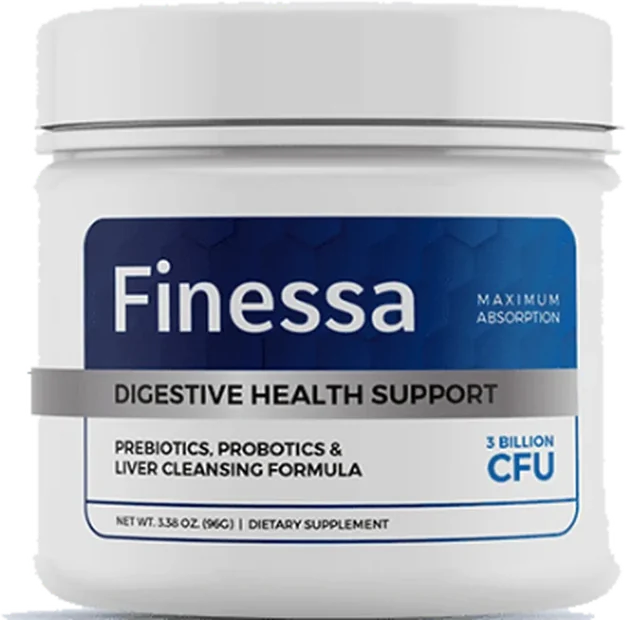
Finessa is a daily digestive powder sold in a 50-serving tub rather than a capsule bottle. One scoop goes into water or a drink you already have. The label is organised as blends with weights attached, which is worth saying plainly because most of this category publishes names without numbers or nothing at all: a 1,000 mg polyphenol blend, a ten-strain probiotic blend at 52.5 mg, Akkermansia muciniphila AH39 at 2 mg on its own line, deglycyrrhizinated licorice, a gut health blend, a liver health blend, and natural flavours with stevia. The tub is 3.38 oz (96 g) and the front states 3 billion CFU. Orders run through ClickBank with a 180-day money-back window.
- Powder, not capsules
Fifty servings a tub. That alone makes most price comparisons in this category misleading, since the default elsewhere is thirty.
- Amounts on the label
Weights are published for the components that carry them. Enough to actually read the formula rather than guess at it.
- One strain named outright
Akkermansia gets its own line at 2 mg instead of disappearing into a blend. Formulas tell you what they are proud of.
- 3 billion CFU
Stated on the front of the tub. Modest for this category, and the split across eleven organisms is not broken down.
The ingredient worth understanding
Akkermansia muciniphila does not live where most gut bacteria live. Rather than floating in the intestinal contents, it colonises the mucus layer coating the gut wall, and it eats that mucus, which is where the name comes from. That sounds destructive and turns out not to be: consuming mucin appears to signal the host to produce more of it, so a healthy population is associated with a thicker barrier rather than a thinner one.
That barrier is why the organism attracted attention in the first place. The gut wall is one cell thick in places, and how well it holds together governs how much of what is in your intestine stays in your intestine. Lower Akkermansia levels have been observed alongside a number of metabolic conditions in population studies, which is an association rather than a demonstrated cause, and the research interest followed from there.
What the honest version of that claim looks like
Observational findings are not treatment effects. The literature here is genuinely interesting and genuinely preliminary: most of it is animal work or small human trials, the largest and most cited of which used a pasteurised preparation rather than a live one and ran for three months in a few dozen people. Nobody should tell you that swallowing this organism reliably changes a metabolic outcome, and this page is not going to.
Two further gaps are specific to Finessa. The strain designation AH39 does not have a substantial published literature of its own, and in bacteriology trial evidence attaches to the strain rather than to the species, so the research that makes Akkermansia interesting was not done on this one. And while the tub states 3 billion CFU overall, nothing says what portion of that is Akkermansia rather than the ten strains it sits alongside. Neither point makes the inclusion pointless. Both mean the label cannot quite be cashed in against the reputation the ingredient arrives with.
Why the polyphenols are the larger half
Here is where the formula's logic becomes clear. Polyphenols are the compounds that make berries, tea, cocoa and olives what they are, and they are notoriously badly absorbed. Only a small fraction crosses the small intestine; the rest travels on to the colon more or less intact. For a supplement aiming at absorption that would be a failure. For one aiming at the bacteria living in the colon it is the delivery mechanism, because those compounds arrive exactly where the bacteria are and get metabolised by them.
Akkermansia in particular has been repeatedly associated with polyphenol-rich intake in both animal and human work. Pomegranate, cranberry and grape polyphenols all show up in that literature. So a formula pairing 1,000 mg of polyphenols with a named Akkermansia strain is not throwing two fashionable ingredients in the same tub. It is adding an organism and feeding it, which is a more coherent proposition than either half alone, and it is the clearest argument this product has.
Reading the label honestly
Seven lines, four of them with weights. Here is what each contributes and where the reading runs out.
- Lead blend1,000 mg
Polyphenol blendThe largest component by weight, and by a wide margin. Polyphenols are poorly absorbed in the small intestine, which sounds like a flaw and is the point: most of the dose reaches the colon intact, where resident bacteria metabolise it.
- Ten strains52.5 mg
Probiotic blendA conventional multi-strain blend, given by weight on the panel. The front of the tub states 3 billion CFU, though not how that total divides between these ten strains and the Akkermansia line below.
- Named strain2 mg
Akkermansia muciniphila AH39Broken out onto its own line rather than folded into the blend above, which is a deliberate signal. This is the formula's headline ingredient and the section below is about why. Its share of the 3 billion CFU is not stated separately.
- Processed extractDeglycyrrhizinated licorice
Licorice with the glycyrrhizin stripped out. That compound is the one responsible for licorice raising blood pressure and depleting potassium, so removing it is a meaningful safety step rather than a marketing one.
- Supporting blendGut health blend
The general digestive layer behind the lead components. Not itemised, so there is nothing here to assess.
- Supporting blendLiver health blend
A separate blend aimed at bile and hepatic support. Also not itemised.
- FormulationNatural flavours and stevia
Worth noting on a powder rather than a capsule. Something you drink daily has to be palatable or the tub ends up at the back of a cupboard.
Two units, and the gap between them. The front of the tub states 3 billion CFU, which is the figure that matters for a bacterial ingredient, since what counts is how many organisms arrive alive rather than how much material went in. The supplement panel then gives milligrams per line. Both numbers are published and neither is joined to the other, so how the 3 billion divides across eleven organisms, ten in the blend plus Akkermansia, is unknown.
Three billion is on the modest side for this category, where products advertising 10 to 50 billion are common. That is worth knowing and it is not the whole story: headline counts are easy to inflate with cheap, hardy strains, and which organisms you are getting and whether they survive the journey matter more than the number on the front. It does mean that if raw count is your comparison, Finessa is not competing on it.
How to take it
- One scoop, once a dayInto water, or into whatever you already drink in the morning. A powder only works if you keep taking it, and attaching it to an existing habit is the most reliable way to manage that.
- Pick a time and keep itThere is no evidence that morning beats evening for this formula. There is plenty that inconsistency beats both.
- Start with half a scoop if you are sensitiveAnything that shifts bacterial populations can produce wind and looser stools in the first fortnight. Easing in makes that easier to live with.
- Do not add other new gut products the same weekStart two things at once and any reaction becomes untraceable. Leave two weeks between additions.
- Judge the probiotic side at six weeks, the polyphenols at six monthsThe two halves of this formula work on genuinely different clocks, which is the single most useful thing to understand before you decide it is not working.
- Note the refund date the day it arrivesThe window is 180 days from purchase, which is long. Long windows are the ones people forget about entirely.
Packages and what they cost
Three packages. The figure that matters here is the per-serving column rather than the price of a tub, because fifty servings is not the industry default and comparing tubs against thirty-day bottles flatters the competition by a wide margin.
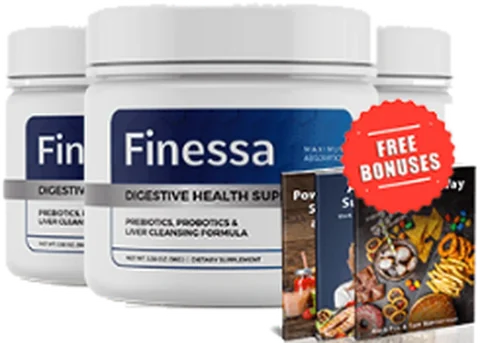
Figures read from the seller's pages in October 2026. The checkout screen is the authoritative source.
| Package | Per tub | Order total | Shipping | Servings | Per serving |
|---|---|---|---|---|---|
| 1 tub | $59 | $59 | charged, amount not shown | 50 | — |
| 3 tubs | $49 | $147 | Free | 150 | $0.98 |
| 6 tubs | $39 | $234 | Free | 300 | $0.78 |
A single tub is roughly seven weeks at one scoop a day. That is already enough to judge the faster half of the formula and nowhere near enough for the slower half, which is the tension running through every purchase decision in this category.
What makes Finessa unusual is that the refund window does not force the issue. At 180 days you have six months to decide, which covers the polyphenol timescale properly. That is a genuine argument for the larger package here in a way it is not for products running 60-day windows against 180-day supplies. Three tubs is a hundred and fifty servings and lands comfortably inside the window.
What comes with the larger packages
Three downloadable guides are attached to the three and six tub packages, delivered as PDFs after checkout. The single tub does not include them and nothing additional is shipped.
- Anti-Aging Superfoods
Home methods for daily energy, built around aphrodisiac foods and drinks. By Mark Fox and Tom Bannerman.
- Cheat Your Way Slim
A meal-timing approach that avoids the all-or-nothing framing most plans collapse under. Also Fox and Bannerman.
- Powerful Detox, Smoothies and Juices
Recipes built on gut-friendly herbs, fibre and soothing spices. By Mark Atlee, and the most relevant of the three given the format.
The 180-day money-back window
Six months, counted from the date of purchase
This is the longest window on anything in this portfolio and it is long enough to matter rather than long enough to look good on a badge. A formula whose lead ingredient works over months needs a window measured in months, and most of this category does not provide one.
ClickBank administers it rather than the brand, which in practice means a more predictable process than writing to a merchant. Keep the confirmation email; the order number is the first thing you will be asked for.
Mechanics in full on the refunds and returns page.
Before you start
The cautions here are mostly about what a digestive supplement can mask rather than about the ingredients themselves, which are unremarkable for most adults. One exception is worth singling out, and it concerns the liver and bile side of the formula.
- Gallstones change the calculation. Anything prompting the gallbladder to contract is the mechanism behind biliary colic. If you have known gallstones, raise the bile-support element with your doctor before starting.
- Expect a fortnight of adjustment. Wind and looser stools are common early on with anything that shifts bacterial populations. Starting at half a scoop makes it easier.
- Live cultures and compromised immunity. If you are severely immunocompromised, have a central venous catheter or a prosthetic heart valve, get medical advice before taking any live-culture product.
- Test for coeliac disease before removing gluten, not after. The test only works while gluten is still in your diet, and cutting it first produces a false negative that can take years to undo.
- Some symptoms are not a supplement question. Blood in the stool, unintended weight loss, difficulty swallowing, persistent vomiting, or symptoms that wake you at night all need assessment rather than a scoop of powder.
- New digestive symptoms after fifty warrant a conversation with a doctor regardless of what else you are taking.
- Pregnant, breastfeeding, under 18, or on prescription medicine: speak to a clinician first.
Frequently asked questions
What is Akkermansia muciniphila and why is it listed separately?
It is a gut bacterium that lives in the mucus layer lining the intestinal wall rather than in the gut contents, which makes it unusual among probiotic organisms. It is listed on its own line, at 2 mg, rather than inside the ten-strain blend, and that separation is the formula's way of telling you which ingredient it considers the headline.
Is 2 mg enough of it?
Not answerable from what is published, though not for want of any number at all. The tub states 3 billion CFU on the front, and the supplement panel gives milligrams per line. What is missing is the bridge between the two: how those 3 billion organisms divide between the ten-strain blend and this single Akkermansia line. Two milligrams could represent a substantial share of the total or a token one, and the label does not say which.
Why does the polyphenol blend get 1,000 mg when the bacteria get milligrams?
Because they are doing different jobs. Bacteria are living organisms and a useful dose weighs very little. Polyphenols are a food component that has to arrive in bulk to matter, and they are the part of this formula feeding the bacteria rather than adding to them. The weight difference is what you would expect rather than an imbalance.
How long before anything changes?
Two different answers. Digestive comfort and regularity, if they shift at all, usually do so within four to six weeks. Anything driven by a change in the bacterial population is a matter of months, because populations shift slowly and only while you keep feeding them. The 180-day window is long enough to answer both, which is unusual in this category.
Is this a probiotic or a prebiotic?
Both, and that is the design. It supplies bacteria and it supplies the polyphenols those bacteria feed on. Products that do only the first are adding organisms to a gut that may not sustain them; the argument for combining is that the two together last longer than either alone.
What is deglycyrrhizinated licorice doing in it?
Licorice with its glycyrrhizin removed. That compound is the one that raises blood pressure and depletes potassium at sustained intakes, so taking it out is the difference between an ingredient you can use daily and one you cannot. The deglycyrrhizinated form has a reasonable history of use for digestive comfort.
Fifty servings, not thirty. Does that matter?
It changes every comparison you make. Most supplements in this category are sold as 30-day bottles, so comparing tub prices directly understates what Finessa gives you by about two thirds. The table above is worked per serving for that reason.
Who takes the payment?
ClickBank, which also administers the guarantee. That is the name that appears on your statement and the party to contact about an order or a refund. This site cannot see your order.
Looking at Finessa?
A published label with weights on it, a named strain that is genuinely interesting and genuinely unproven at this dose, and six months to make up your mind. Prices and terms are on the seller's own page.
Check official pricingPrices and package contents are the seller's and can change without notice.